
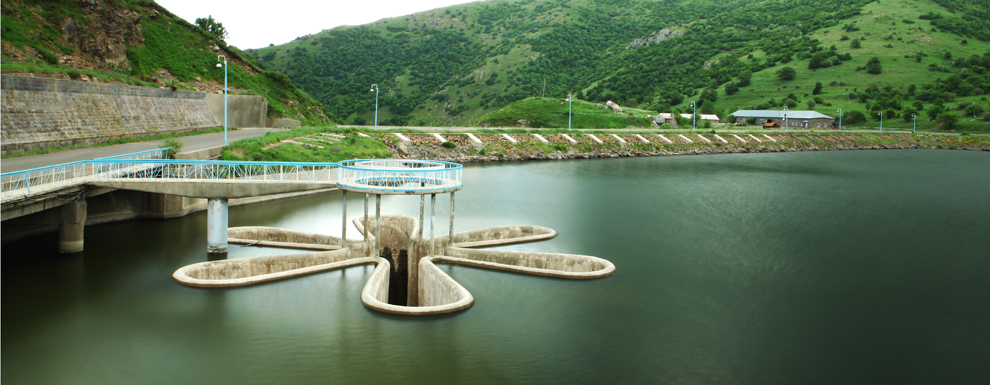
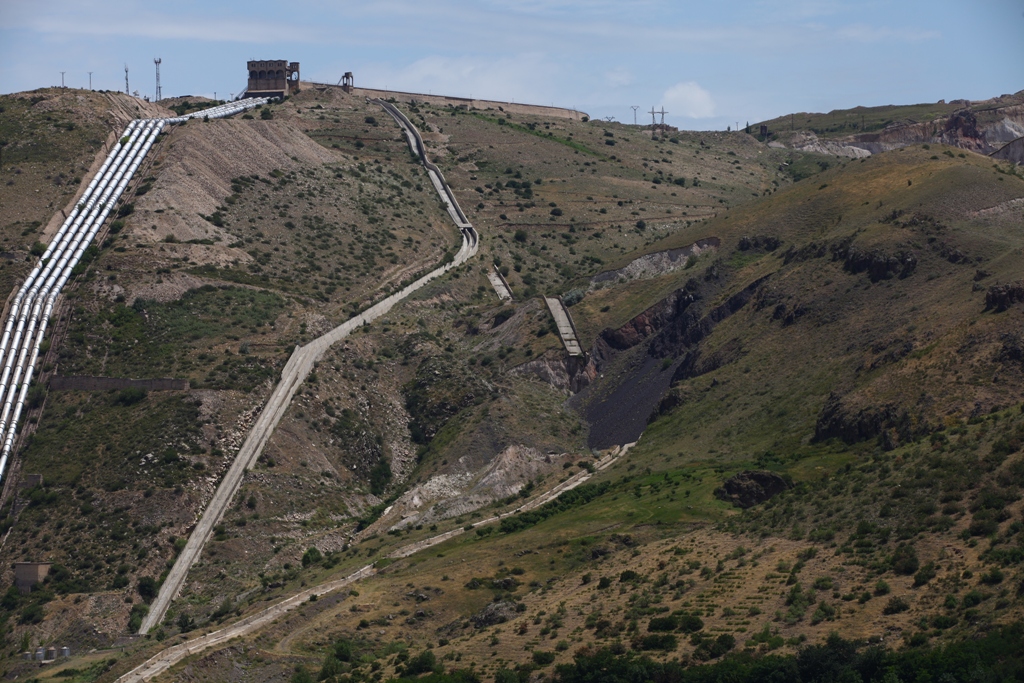
The Client: “Armglavenergo” of the Ministry of Power Engineering and Electrification of USSR.
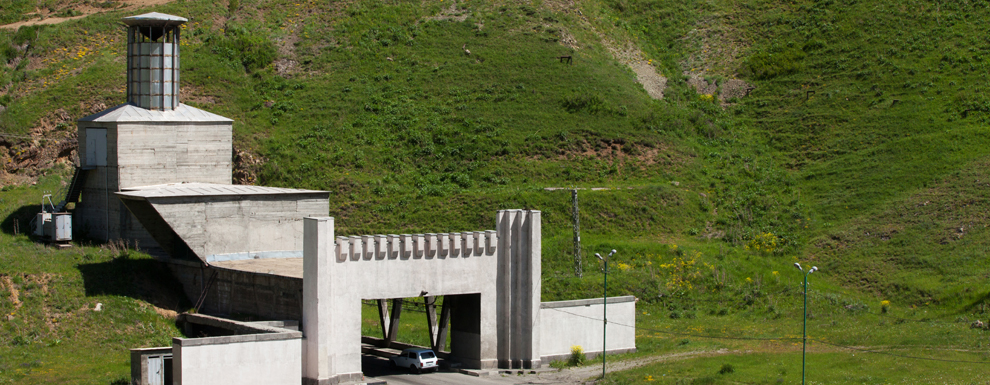
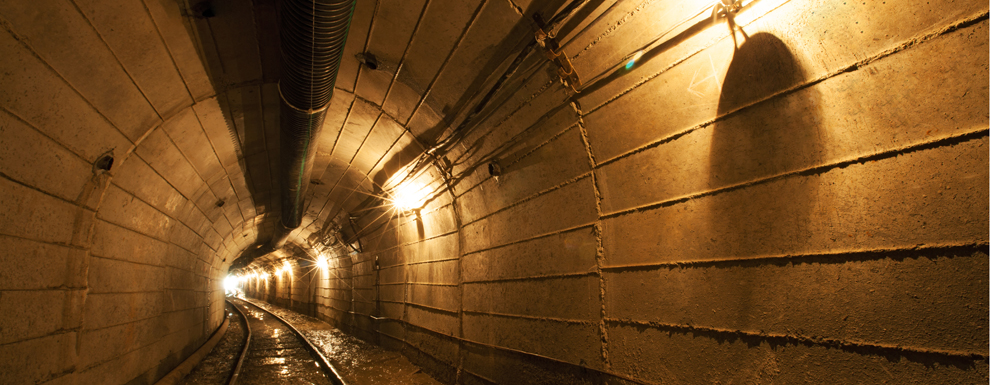
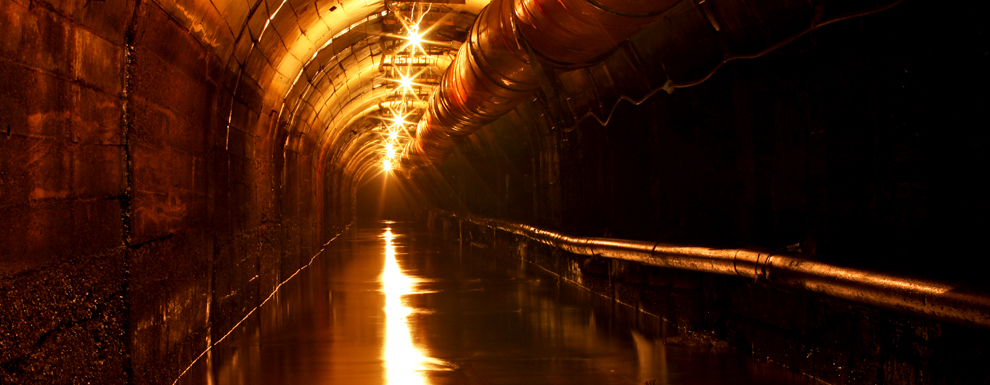
30 km long Tunnel No.2, the cross section of the main part with 3.7×3.7m size of which is arched and the rest has a circular section of 4.1 m in diameter.
The Tunnel No.2 has been built from 7 faces, the Faces №5 and №11 have been driven from the
intake and outlet portals respectively. The parallel (bis) Face №5 and Face №6 have been drifted
using the Shaft №2, the depth of the shaft being 342 m and the clear diameter – 6 m.
The driving of tunnel from Faces №7 and №8 has been conducted from Shaft №3, the depth of which was 660 m and clear diameter was 6 m.
The driving of tunnel from Faces №9 and №10 has been conducted respectively from Shaft №4, the depth of which was 360 m and clear diameter was 6 m.
It is noteworthy that as a whole the complex of Arpa-Sevan conduit structures was constructed based mainly on the resources of Construction Enterprise “Arpasevanstroj” of the All-Union Association “Gidrospetsstroj”, enlisting the services of Ukrshakhtstroj on the subcontraction basis. The works were initiated in 1962 and completed in 1980. The construction works have been carried out under highly complicated engineering-geological conditions at the depth of tunnel route that reached sometimes 1320 m from the surface of the Vardenis Mountain Ridge. In the course of construction the builders came across some exceptional phenomena of rock outburst and CO2 gas blow-out in fractured andesite-basaltic textures, high-thermal subterranean waters, the temperature of which reached 65°C, the high geothermic temperature of surrounding rocks being varied within 42 – 48°C that demanded intense ventilation in the dead faces and cooling of air in the drift.
The tunnel conduit traversed the regional Hankavan-Syunik fault at the stretch of 3 km, along the strike of which Miocenic clay has been stripped at 600 – 800 m depths. The stripped clay mani-fested intensive rock pressure with the value up to 400 Ton/m2. The lining of the tunnel has been strengthened several times at 800 m long stretch, till a precast lining of RC blocks with stringently limited ductility was built up.
The thickness of precast blocks was 50 cm with percentage of reinforcement of 3.2 % and the clear diameter of precast lining was 4.1 m. Along with the mentioned phenomena the drifting works were intermitted by rushes of underground water, the most intense of which was in 1976, when the established discharge of cold water (+8°C) in the drift was 600 l/sec. The rush of water in Face №9 suspended the works for additional six months.
Despite the aforementioned difficulties and marginal conditions of works, the following works have been implemented during 15 construction years of Arpa-Sevan conduit:
| 1. The tunnels of general have been driven and reconstructed | 48 358 m |
| 2. The bulk of excavated rocks | 1 mln.m3 |
| 3. Installation of arched supports | 18 300 t |
| 4. Concrete and reinforced concrete | 483 000 m3 |
| 5. Reinforcing steel | 27370 t |
| 6. Pipelines of different diameters | 397 km |
| 7. Consolidation and control grouting | 127 665 m3 |
| 8. Power and lighting cables | 50.0 km |